Why we built MinteeGrid
March 14, 2026 · 4 min read
The idea came from a familiar routine: search for a printable worksheet, find one that's almost right, print it, and discover the numbers are too easy or the theme is wrong for the kid actually sitting at the table. Repeat next week.
The gap wasn't content — it was fit
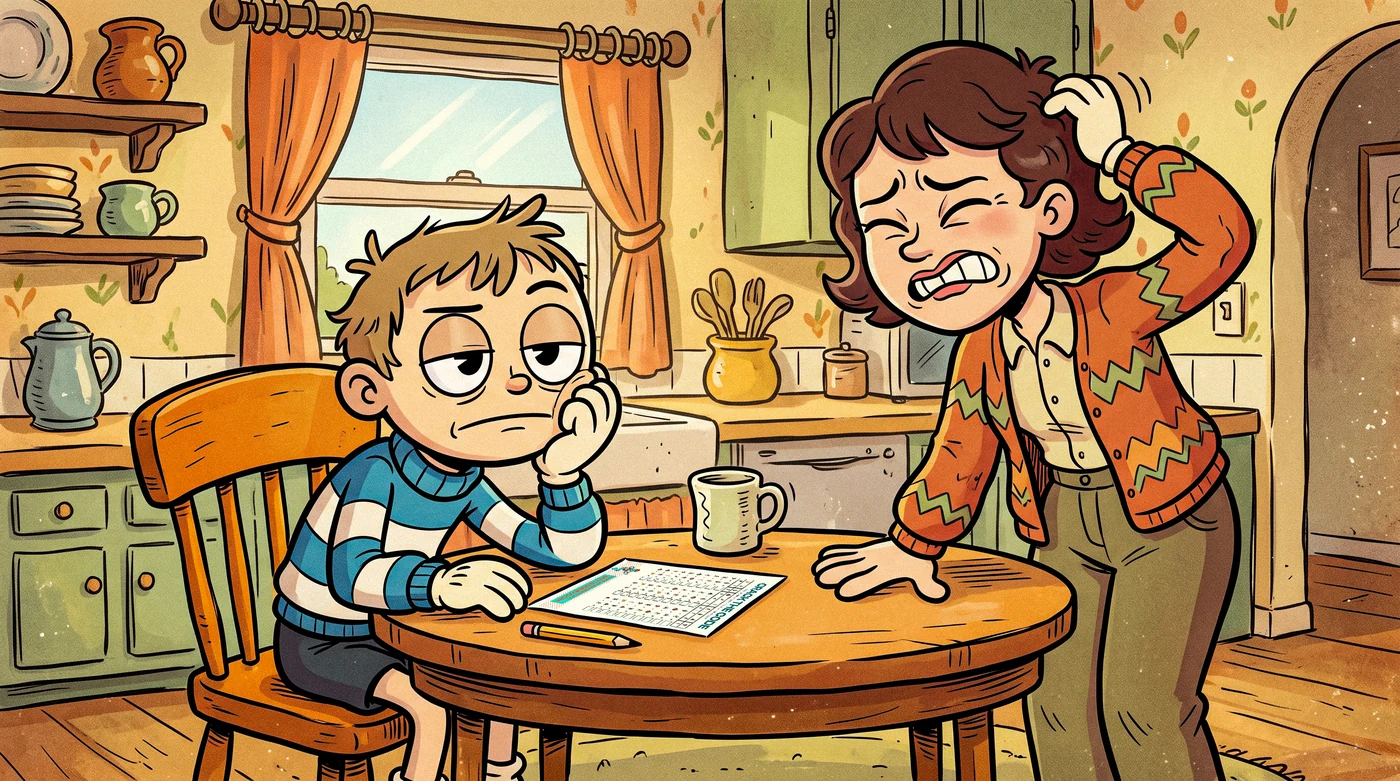
There's no shortage of worksheet PDFs online. What's missing is a way to get one that fits a specific child's level right now, not the level a stranger guessed at when they made the file months ago. A fixed PDF is frozen at whatever difficulty its author picked; a generator can be told exactly where a kid actually is today. That's a generation problem, not a search problem — which is why MinteeGrid builds each sheet on request instead of hosting a library of pre-made ones.
Every sheet should be disposable
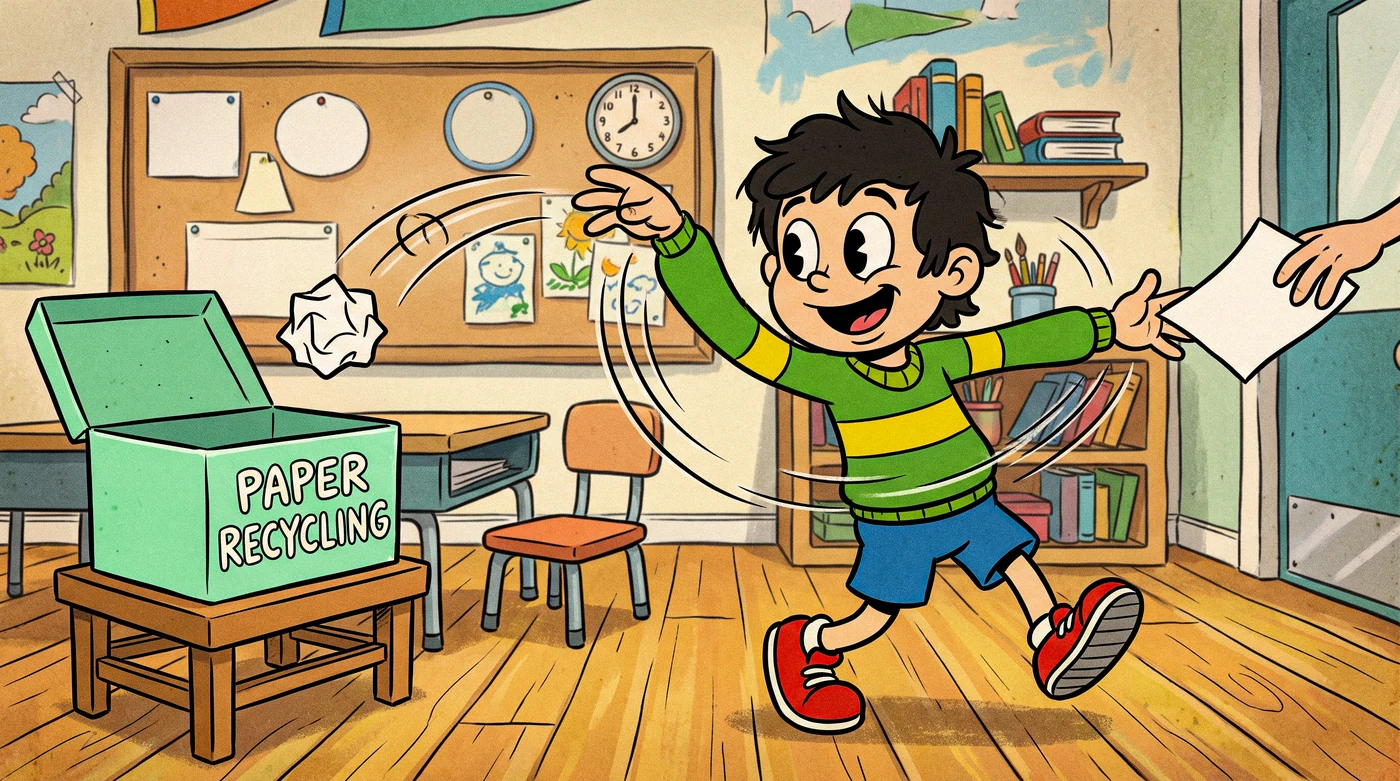
If a worksheet is easy to make fresh, there's no reason to reuse one, laminate it, or ration it. A sheet gets used once, maybe scribbled on, and a new one is a few seconds away — which changes how it gets treated. It's practice paper, not a resource to protect. That's also the whole logic behind running on tokens instead of a fixed sheet library: a token buys one fresh, disposable sheet, generated for the settings picked right then, not a slot in a set someone else made.
The same character, every time
Every scene in a MinteeGrid sheet is assembled from a fixed library of illustrated characters and objects — a new layout every request, but never a redraw of the art itself. It means a fish always looks like the same fish, and a character can show up consistently across sheets instead of subtly changing every time it's regenerated — which matters more than it sounds like it should for a kid who's learning to recognize and name things, not just count shapes.
Try it yourself
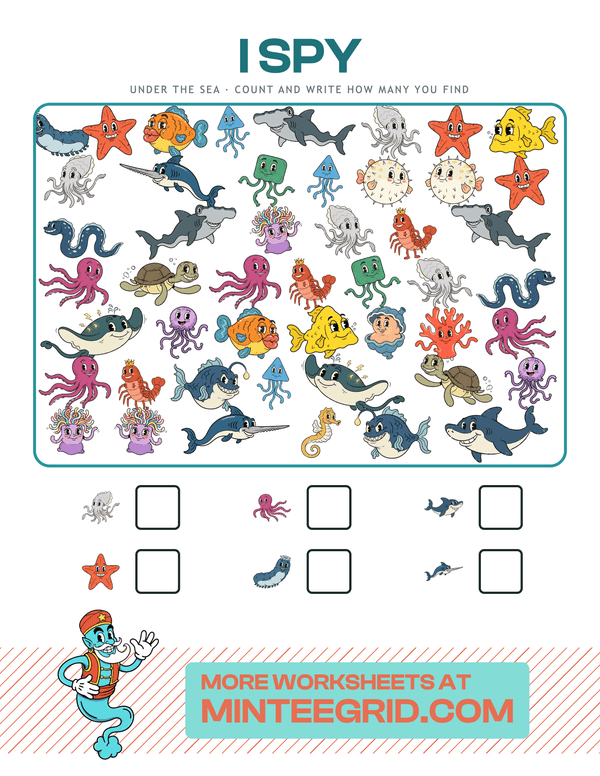
I Spy
I-spy scenes with themed objects to find and count. Focus · 3–5 years.
How a sheet actually gets made
Behind the settings a parent picks (theme, difficulty, digit range, whatever's specific to that generator) is a two-step process: a generator function builds the sheet's exact layout from those parameters, then a rendering step turns that layout into a print-ready PDF. The whole thing runs in seconds, on request — there's no pre-made file being pulled off a shelf, and no two runs at the same settings produce an identical sheet.
Try it yourself
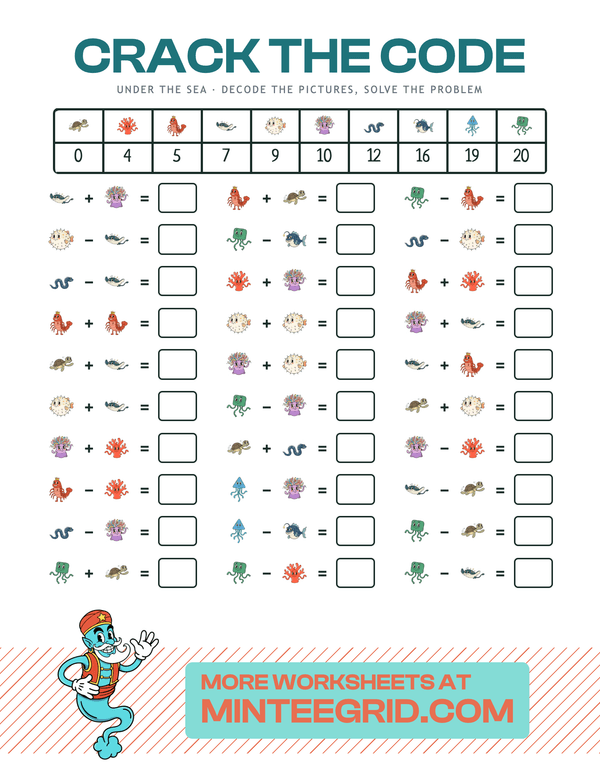
Crack the Code
Decode the icons, solve the problem. Logic · 6–8 years.
That's most of it. No grand roadmap to announce — just more generators, better ones, and sheets that keep matching the kid they're for. If a specific generator or theme would actually get used at home, that's the kind of thing worth telling us about.
FAQ
Is MinteeGrid free to use?
New accounts start with a small number of free tokens — enough to try a few sheets across the generators with no card required. Beyond that, MinteeGrid runs on tokens (one token = one worksheet run), topped up through a monthly plan or a one-off pack; see /pricing for current details.
Do tokens expire?
No — plan tokens refill each month, but nothing you've already been given expires or resets.
Why does the same character look the same across different sheets?
Because a sheet is assembled from a fixed library of illustrated characters and objects, not redrawn from scratch on every request — a fish is always the same fish, a rocket is always the same rocket, sheet to sheet. See the section below for why that consistency matters more than it sounds like it should.
Do I need a separate account for each kid?
No — a single account's token balance covers any generator, for any kid, at any difficulty. There's no per-child account or profile system; the difficulty and theme settings on each sheet are what adapt it, not a stored profile.