Printable worksheets vs. apps: why paper still wins for practice
May 18, 2026 · 6 min read
An app that marks an answer right or wrong the instant it's typed sounds like the better tool. For drills — multiplication facts, decoding, counting, spelling — it usually isn't, and the reasons are more concrete than "screens are bad."
Handwriting a number is part of the practice
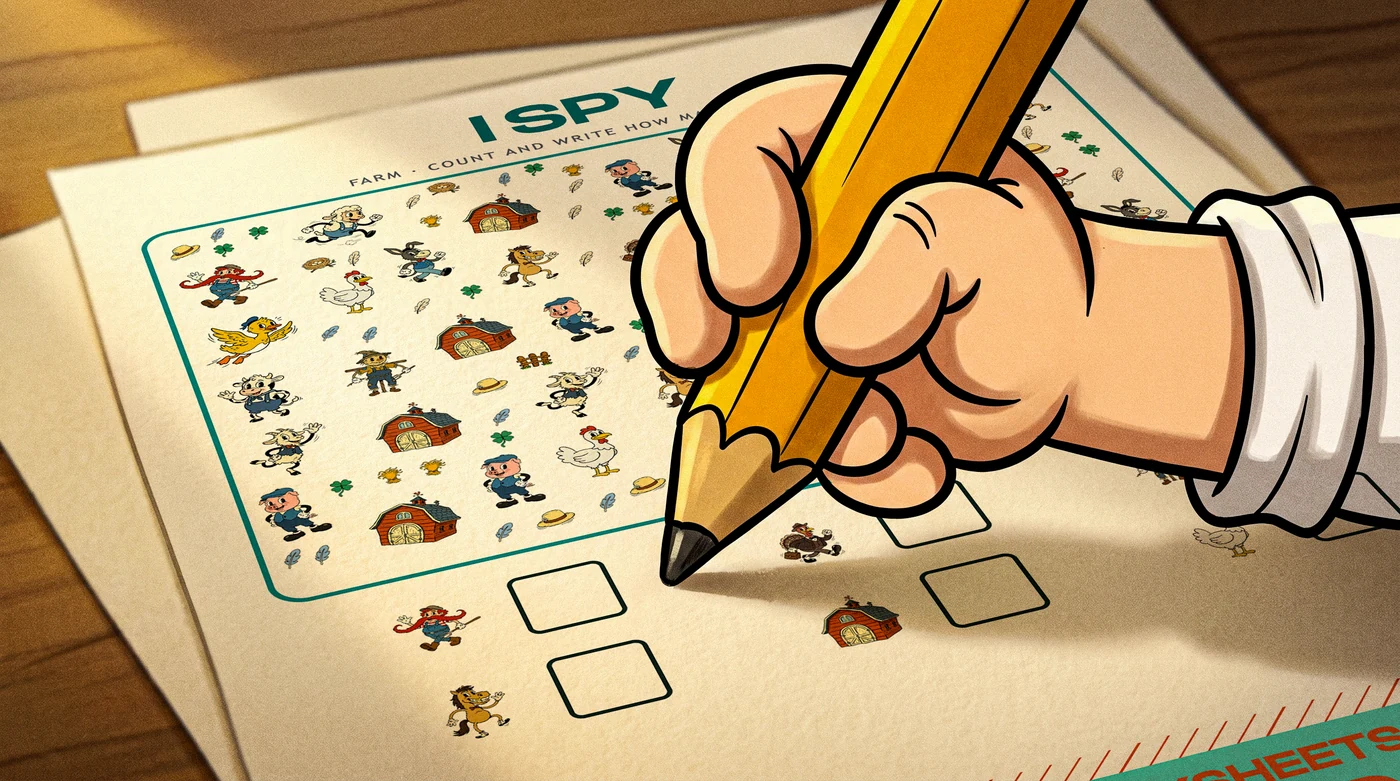
Writing "48" is not the same motor-and-memory task as tapping "4" then "8" on a screen. The extra second it takes to actually form the digits gives the brain more time to encode the answer — this is the same effect researchers see in handwritten versus typed note-taking, and it shows up the same way in arithmetic drill. It's a small difference on any single problem, but it compounds across a full sheet of twenty.
No next button to lean on
A tablet quiz almost always has a fast way to guess and immediately find out if you were right. That's a genuine convenience for looking something up — and a real problem for drill practice, because it quietly trains guess-and-check instead of working the problem all the way through. A paper sheet has no next button. The only way forward is to actually solve it.
Lifehack: if a sheet does have a "check my answers" moment (a parent reviewing it at the end), do the check after the whole sheet is done, not problem-by-problem — the delay is what preserves the "no shortcut" pressure that makes paper practice work in the first place.
One sheet, one sitting, no notifications
A worksheet doesn't buzz, autoplay a video, or nudge toward a different app mid-problem. For a task that needs five focused minutes, that's worth more than any grading feature — the competing app or notification that pulls attention away from a tablet session simply doesn't exist during five minutes with a printed sheet and a pencil.
The whole sheet is visible at once
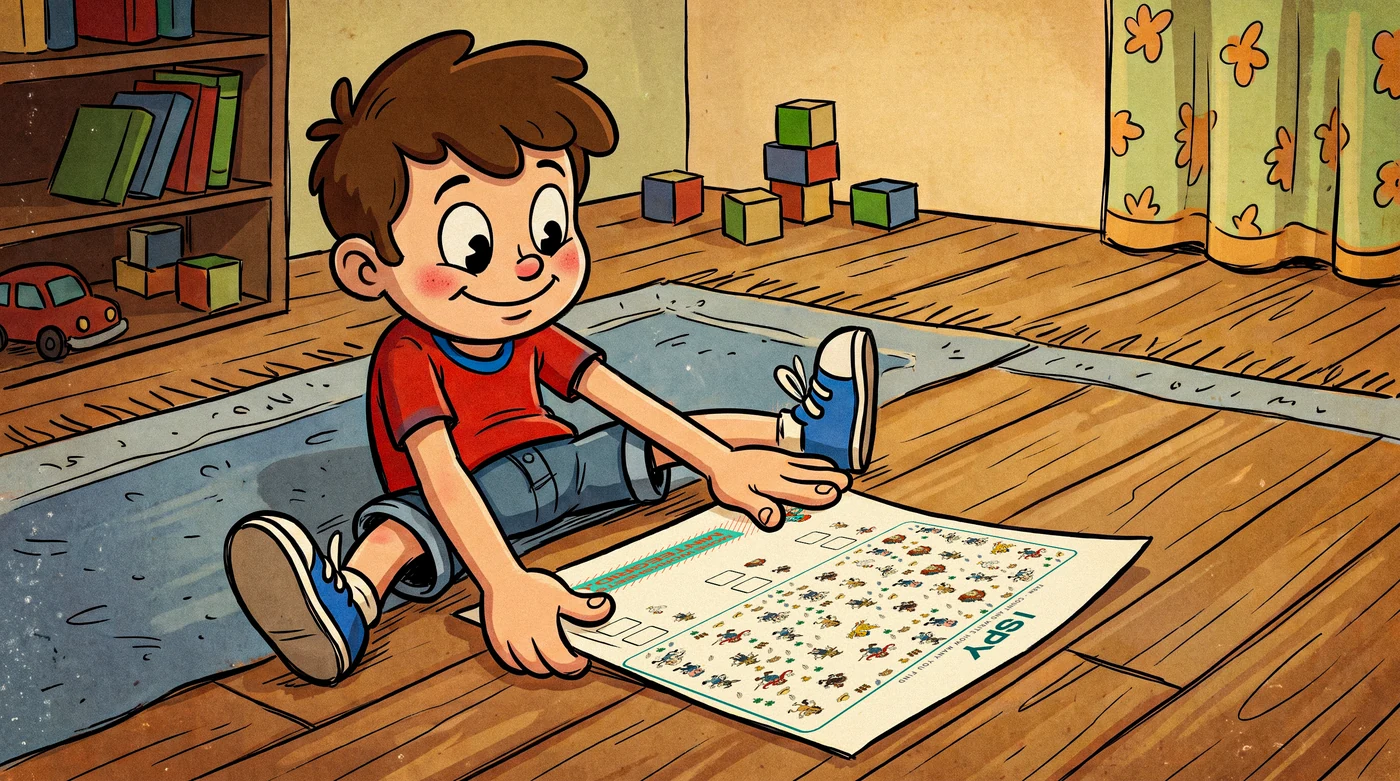
A screen usually shows one problem at a time. A printed sheet shows all twenty at once, which lets a child see the whole task, skip a hard one and come back to it, and watch a page visibly fill up — a kind of progress a scrolling quiz never shows. That visibility also makes it easy for a parent to scan the sheet afterward and see exactly which problems caused trouble, without reconstructing it from an app's history screen.
Printable worksheets vs. apps: what each one is actually good for
Neither format is universally better — they're suited to different jobs.
| Printable worksheet | Learning app | |
|---|---|---|
| Best for | Repetitive drill (facts, decoding, counting) | Exploration, new-concept intro, games |
| Feedback speed | Delayed (end of sheet) | Instant, per answer |
| Guessing risk | Low — no shortcut to the answer | Higher — easy to guess-and-check |
| Distraction risk | None | Notifications, other apps, autoplay |
| Motor engagement | High — handwriting | Low — tapping |
| Reusability | Fresh sheet, no reuse needed | Same content can repeat |
| Screen time cost | Zero | Counts against daily screen time |
The honest read: an app is a fine way to introduce a new concept with animation and instant explanation. A printed sheet is the better tool once the concept is understood and the job shifts to making a fact automatic through repetition — which is what a generator like MinteeGrid is actually built for.
None of this makes screens useless
This isn't an argument that screens have no place in learning — for exploring a brand-new concept, an interactive app with instant explanation genuinely helps. It's specifically that for repetitive, get-it-into-long-term-memory practice — the kind picking the right difficulty is about tuning — a plain sheet of paper is still doing something a screen doesn't, and it's worth reaching for on purpose rather than defaulting to whatever's already in a child's hands.
FAQ
Are printable worksheets actually better than learning apps?
For repetitive skill-building — times tables, decoding, counting — yes, for the reasons below: handwriting engages memory more than tapping, there's no guess-and-check next button, and nothing on the page competes for attention. For exploratory or game-based learning, apps have real advantages a worksheet doesn't — see the comparison below.
Doesn't instant feedback from an app help kids learn faster?
It helps them find the *right answer* faster, which isn't the same as learning the *skill* faster. Instant right/wrong feedback makes it easy to guess and immediately correct, which trains guess-and-check instead of working the problem out — the opposite of what repetitive drill practice is supposed to build.
Is handwriting really better for memory than typing?
For learning new material, yes — this is well-established in education research on note-taking and shows up the same way in arithmetic: forming a digit by hand takes measurably longer than tapping a key, and that extra time and motor engagement gives the brain more to encode the answer with. It's a small effect per problem, but it compounds across a full sheet of practice.
What's the actual downside of screen-based practice?
Not the screen itself — it's what competes with it. A notification, an autoplay video, or a tempting different app is one tap away during a tablet session and literally doesn't exist during five minutes with a printed sheet and a pencil.