Executive function: the planning skills kids use every day
October 20, 2026 · 7 min read
Some of the most important skills for school are not reading or math, but the skills that let a child use them: remembering what the teacher said, stopping before blurting out, and switching to a new task. Together they are called executive function.
The three core skills
- Working memory — holding information in mind while using it. "Get your shoes, your coat and your bag."
- Inhibitory control — stopping an impulse. Waiting your turn. Not grabbing.
- Cognitive flexibility — switching rules or tasks. Going from play to clean-up; seeing a problem a new way.
Planning, organizing and self-control grow out of these three.
Games that train them
- Simon Says — listen, and stop yourself when Simon did not say.
- Red Light, Green Light — move and stop on a signal.
- Freeze dance — dance, freeze, dance.
- Memory games — matching pairs, "I went to the store and bought…"
- Card games with changing rules — Uno, Crazy Eights.
Lifehack: give instructions in pairs, then threes. "Put your cup in the sink and your book on the shelf." Working memory grows by being used just past its limit.
Puzzles that need a plan
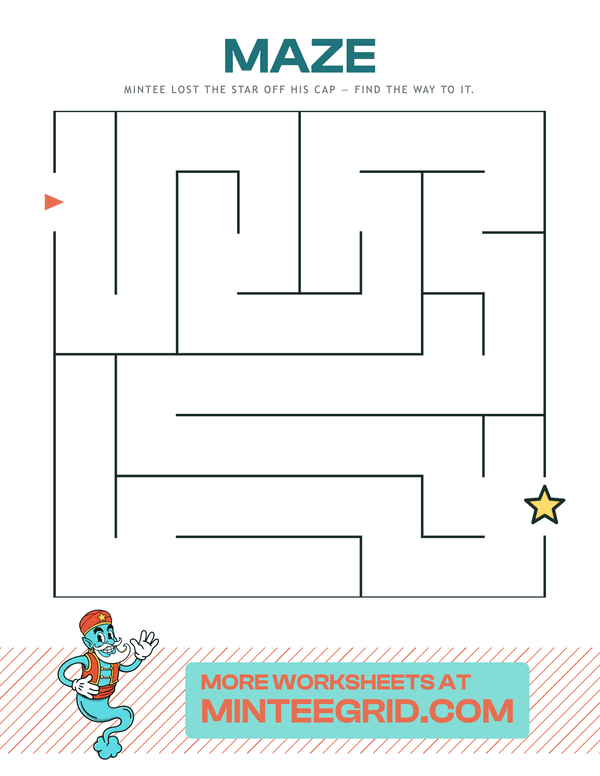
Mazes are executive function on paper: look ahead, hold the path in mind, notice a dead end and change course. Puzzles where a child has to keep two rules at once — like Who's Late?, which asks for reading a clock and comparing it with a schedule — stretch working memory too.
Try it yourself
Classic Maze
One way in, one way out — and never the same maze twice. Mazes · 3+ years.
Everyday practice
Cooking with a recipe, packing a bag from a list, following a set of steps — ordinary jobs build these skills more than any app. For a whole day in steps, see why daily routines help kids.
FAQ
What is executive function in children?
A set of mental skills for managing yourself: working memory (holding instructions in mind), inhibitory control (stopping an impulse) and cognitive flexibility (switching between tasks or rules). Planning and organizing grow out of them.
How do I improve my child's executive function?
Games with rules, especially ones where the rules change — Simon Says, Red Light Green Light — plus puzzles that need a plan, like mazes, and everyday jobs with steps, like cooking.
At what age does executive function develop?
It starts in toddlerhood and keeps developing into the early twenties. The biggest jumps in young children happen between three and seven.