Building frustration tolerance with puzzles that are just hard enough
October 20, 2026 · 6 min read
Every parent knows the moment: the puzzle piece will not fit, the maze hits a dead end, and the pencil goes flying. It is tempting to step in and fix it. But those small moments are exactly how children learn to handle frustration — if the challenge is the right size.
Frustration in small doses
Frustration tolerance is a skill. Children build it by meeting frustration they can manage and coming out the other side. Too easy, and there is nothing to learn. Too hard, and the lesson is "I can't." The target is just hard enough.
Coaching through stuck
- Name it. "That's frustrating. The path keeps hitting walls."
- Stay calm. Your voice sets the temperature.
- Offer a break or a hint, not the answer. "Want to try from the other end?"
- Praise the sticking, not the finishing. "You kept going even when it was hard."
- Let them finish. The win has to be theirs.
Lifehack: teach "stuck" as a stage, not a failure. Say "you're in the stuck part — everyone gets a stuck part" and children start to expect it, and to wait it out.
Picking the level
Puzzles with clear levels make this easy: start one level below where you think your child is, so the first sheet ends in a win, then step up. Most of our generators have three levels, and every sheet comes out different, so a level can be repeated without memorizing it.
Good ones for practicing being stuck: mazes, Find the Twins, Math Squares and Lock and Key.
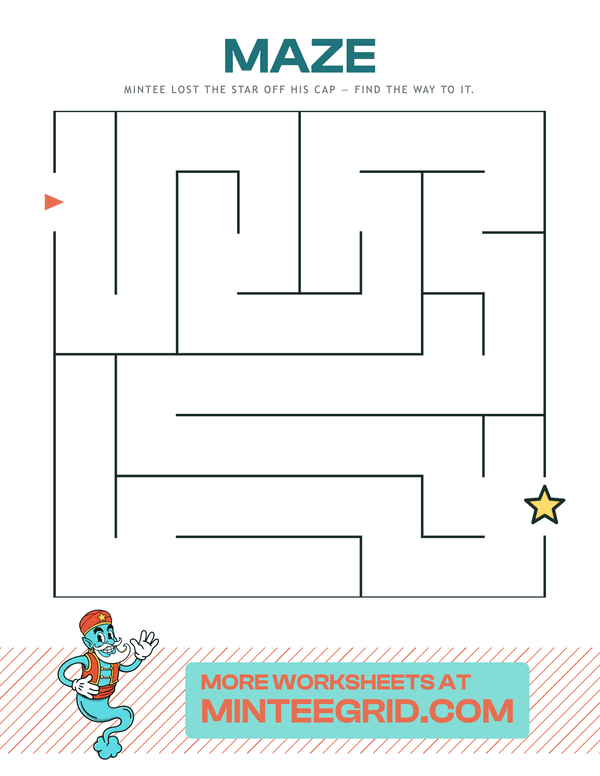
Try it yourself
Classic Maze
One way in, one way out — and never the same maze twice. Mazes · 3+ years.
For the big feelings themselves, see calm-down strategies that actually work.
FAQ
What is frustration tolerance?
The ability to stay with something hard without giving up or melting down. It grows with practice — by meeting manageable frustration and getting through it.
How do I help my child cope with frustration?
Name the feeling, stay calm, offer a break or a small hint rather than the answer, and praise the effort of sticking with it. Then let them finish it themselves.
How hard should a puzzle be for a child?
Hard enough that they have to think and might get stuck, easy enough that they can finish with a hint. If every try ends in tears, step the level down.