Calm-down strategies that actually work for kids
October 13, 2026 · 6 min read
"Calm down" is one of the least useful things to say to an upset child. Not because it's unkind, but because a four-year-old doesn't know how. Calming down is a skill, and like every skill it has to be taught in small steps, practiced when nothing is wrong, and used when something is. Here are strategies small enough for young children to actually use.
The rule that makes all of them work
Practice when calm. Use when upset.
In the middle of a meltdown, the thinking part of a child's brain isn't running the show. They can't learn anything new right then — but they can reach for something they've done many times before. So every strategy below is something to practice as a game on a good day, so it's there on a bad one.
1. Flower and candle breathing
Slow breathing is the most reliable calm-down tool there is, and the trick for young kids is making it something they can picture:
- Smell the flower — breathe in slowly through the nose.
- Blow out the candle — breathe out slowly through the mouth.
Three to five times. Hold up a finger as the "candle" so they have something to blow at.
Lifehack: practice it at bedtime every night for a week. It's calming anyway, and by the time you need it for a meltdown, it's automatic. "Let's do flowers and candles" becomes a signal they already know.
2. Count it down
Counting slowly from ten to one gives the brain a simple job while the feeling passes. For older kids, count backward by twos, or name five things they can see.
3. Squeeze and let go
Squeeze a pillow, a stuffed animal or your own fists as hard as you can for five seconds, then let go and feel the difference. It gives angry energy somewhere to go that isn't a person.
4. A calm corner
A calm corner is a small, cozy spot a child can choose to go to: a cushion, a blanket, a feelings chart, a favorite book, paper and crayons. It's not a time-out — nobody is sent there. It's a place to go to feel better, and children who choose it themselves are already practicing self-control.
Lifehack: build the calm corner together and let your child pick what goes in it. A corner they helped make is one they'll actually use.
5. A quiet, focused task
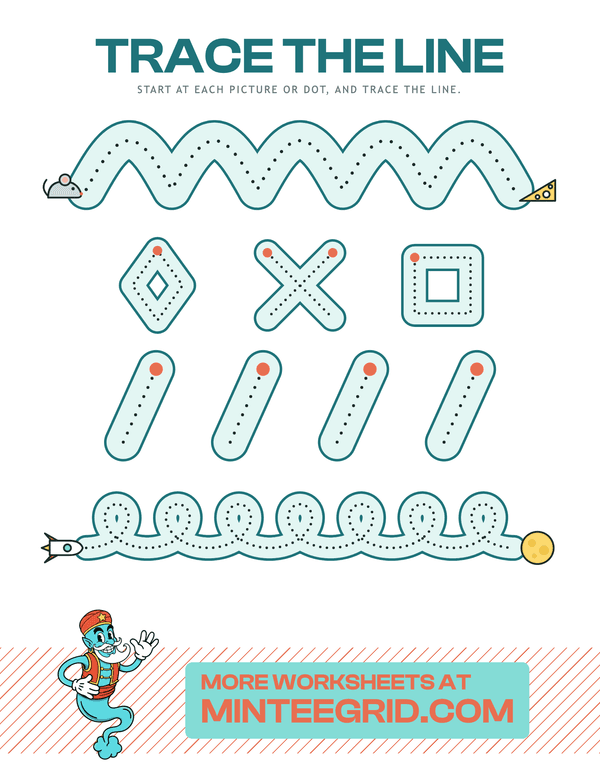
Once the biggest wave of a feeling has passed, a simple task with a clear end helps many children settle: coloring, tracing a line, following a maze from start to finish. The steady, repetitive work gives the mind something to hold on to.
Keep a few printed sheets in the calm corner. Trace the Line and Tangled Lines are calm, steady and have no wrong answers that end in frustration.
Try it yourself
Trace the Line
First strokes, waves, zigzags, loops and shapes — or one long road for the car to drive home. Mazes · 2–5 years.
6. Name the feeling first
All of this works better when the feeling has a name. "You're really angry that your brother took the truck" often softens a child more than any strategy — they feel understood. Feelings vocabulary grows with practice; see how to teach kids to name their feelings, and Feelings Faces for a drawing page that builds it.
When it doesn't work
Some days nothing works, and that's normal too. Stay close, keep your own voice calm, keep everyone safe, and wait. Talk about what happened later, when everyone is calm: "That was a big feeling. Next time, what could help?" That conversation is where the next strategy gets learned.
For the bigger picture of building these skills day to day, see social-emotional learning at home.
FAQ
What is a good calm-down strategy for young kids?
Slow breathing that a child can picture works well from about age three: "smell the flower" (breathe in through the nose) and "blow out the candle" (breathe out slowly through the mouth). Repeat it three to five times. Counting slowly to ten, squeezing a pillow, or sitting in a quiet calm corner also help.
Should I teach calm-down strategies when my child is upset?
No — teach them when your child is already calm, and practice them like a game. In the middle of a meltdown a child can't learn something new, but they can use a strategy they have practiced many times.
What is a calm corner?
A small, cozy spot with a few calming things — a pillow, a feelings chart, a book, paper and crayons — where a child can go to settle. It's a choice, not a punishment, which is what makes it different from a time-out.
Do coloring and mazes help kids calm down?
For many children, yes. A focused, repetitive task with a clear end — coloring, tracing a maze, following a line — can help a child settle once the worst of a feeling has passed. It's a good thing to keep in a calm corner.