Number mazes for counting practice — the digit as a shape
September 6, 2026 · 6 min read
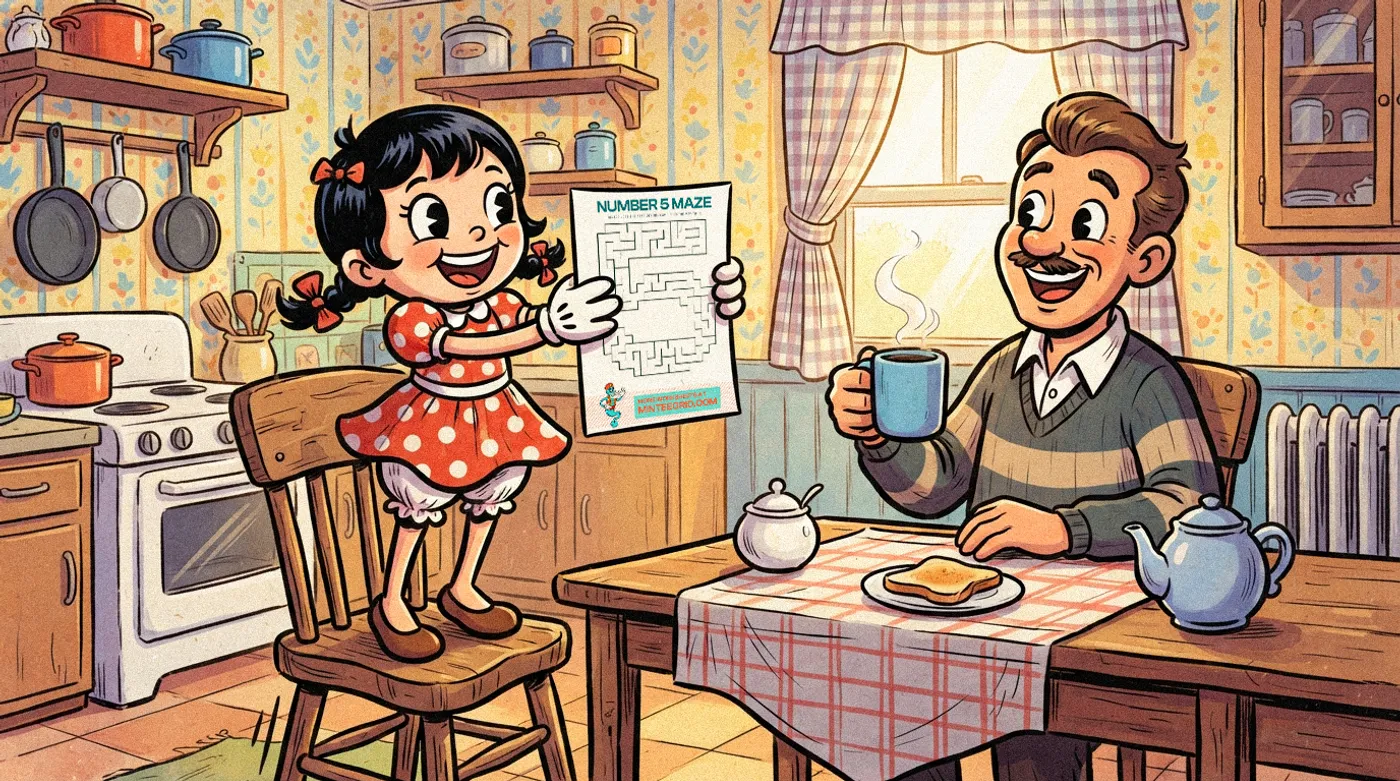
Counting and writing numerals are two different skills that arrive about a year apart, and the gap between them is where most of the frustration lives. A child can count fourteen buttons perfectly and still draw a 5 with the loop on the wrong side, because those two things have almost nothing to do with each other. One is quantity. The other is a shape you have to know from memory well enough to reproduce.
A number maze is for the second one.
What is on the sheet
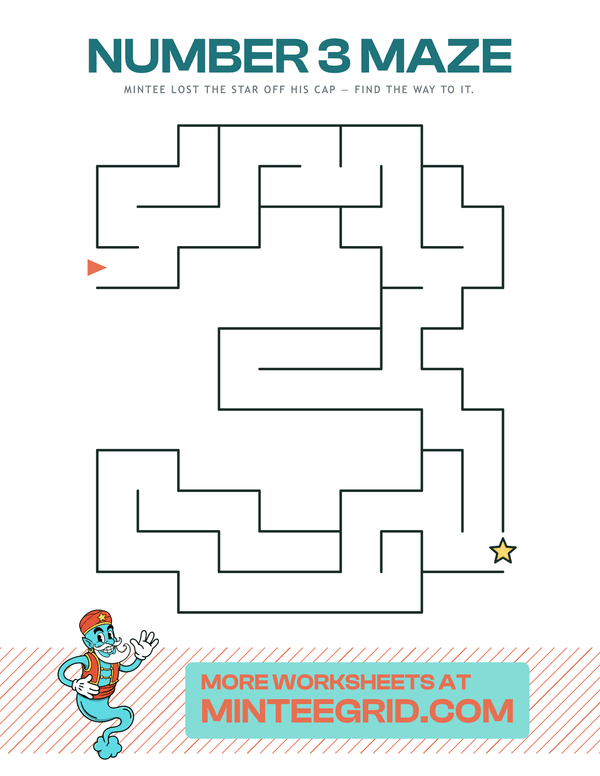
A single digit filling the page, with a real maze cut into it. The arrow is on the left edge of the shape, the star is on the right, and one route joins them, staying inside the numeral the whole way.
Pick the digit from the keypad on the form — 0 through 9, each one its own sheet.
Which digits deserve the most time
Not all ten are equally worth printing.
6 and 9 are the same shape rotated, and telling them apart is a genuine and very common difficulty. Two minutes spent traveling around the inside of a 6 is a much better intervention than being corrected for the fourth time.
2 and 5 are built from the same three strokes — a horizontal, a diagonal or curve, and another horizontal — assembled in a different order. Children who confuse them are not being careless.
1 and 7 cause trouble in mixed-script households, where a crossed European 7 and a plain 1 look nothing like the shapes on a US worksheet.
0, 3, 4, 8 are mostly unambiguous and mostly get learned without help. Print them for completeness rather than for practice.
Lifehack: print a 6 and a 9 at the same width and put them side by side on the table. The child solves both, and then you ask which is which — the answer arrives from having been inside both shapes rather than from being told the rule about which way the tail goes.
Choosing the corridor width
| Age | Width | What the sheet becomes |
|---|---|---|
| 3–4 | Wide | A tracing exercise. Few junctions, and the digit is enormous. |
| 5–6 | Medium | A real maze with dead ends, five to ten minutes of work. |
| 7+ | Narrow | Dense. Same digit, four times as much maze inside it. |
The numeral is the same size at every setting — narrow corridors mean more corridors, not a smaller number. That matters more here than on an ordinary maze, because the whole point is that the child spends the time looking at a large, unmistakable 5.
Where this fits with actual counting
It does not replace counting things. Buttons, stairs, and grapes are how quantity gets learned, and no worksheet is going to beat them.
What this does is the other half: making the written symbol familiar enough that writing it stops being an act of recall. When a child has to stop and think which way the 3 faces, that thinking is coming out of the same attention they needed for the sum. Getting the shape automatic frees it up.
For counting itself — the one-to-one, count-and-write-the-number kind — I Spy sheets are the closer tool: a scene to search, and a box to write the number of each thing you found.
For a classroom
Number of the week, and every child gets a different maze inside the same digit. Nobody copies, nobody has seen theirs, and next year's class gets a fresh set from the same setting.
Two sheets side by side also make a display that is doing something: the whole class's 7s on a wall, each one solved differently.
Try it yourself
Number Maze
The digits zero to nine, each one a maze to solve. Mazes · 4+ years.
Related
- Alphabet mazes for letter recognition — the same idea for A to Z
- I Spy worksheets for early counting — for quantity rather than the numeral
- Mazes before handwriting — what comes before forming strokes
- A parent's guide to picking difficulty — reading the child, not the label
FAQ
What is a number maze?
A maze cut into the outline of a single digit, zero to nine, filling the page. You pick the digit on a keypad and the corridor width, and get one route from the arrow on the left to the star on the right, running inside the shape of that digit.
Does this teach counting?
It teaches the shape of the numeral, which is a different thing and comes first. A child can count to twenty out loud long before they can reliably write a 5 or tell a 6 from a 9 — this is for that gap, not for the counting itself.
Which digits are hardest to tell apart?
6 and 9, which are the same shape turned round, and 2 and 5, which have the same three strokes in a different order. Those four are worth more time than the rest.
Is every sheet different?
Yes. The digit is the same shape every time; the maze inside it is built fresh on each generation, so the same number can be printed for a whole class or on five separate days without repeating a puzzle.
Can I get a number bigger than nine?
Not as a single sheet — the generator does one digit at a time, because a two-digit number on one page halves the size of each numeral. Print two sheets side by side if you want a teen number on the wall.