Mazes before handwriting — the pre-writing case for wide corridors
September 4, 2026 · 5 min read
Long before a child forms a letter, they have to be able to do something more basic: hold a pencil and keep the line it makes inside a boundary, for as long as it takes to get somewhere. Tracing worksheets practice this directly and honestly, and children find them boring almost immediately, because there is no reason to care whether the line stays inside.
A maze gives them a reason.
What the wide setting is actually for
The widest corridor setting on a classic maze is about 22mm — eight cells across the whole page. As a puzzle that is barely anything: a handful of junctions, most of them obvious. If you print one expecting it to occupy a five-year-old, it will not.
It is not aimed at a five-year-old. At three, a maze that wide is almost entirely a drawing exercise, and the few junctions are just enough to make the drawing feel purposeful. The child is practicing the same physical thing a tracing sheet asks for, and doing it because there is a star at the other end rather than because they were asked to.
That is the whole trick, and it is why the setting exists even though it makes a puzzle nobody older would look at twice.
What to watch in the first thirty seconds
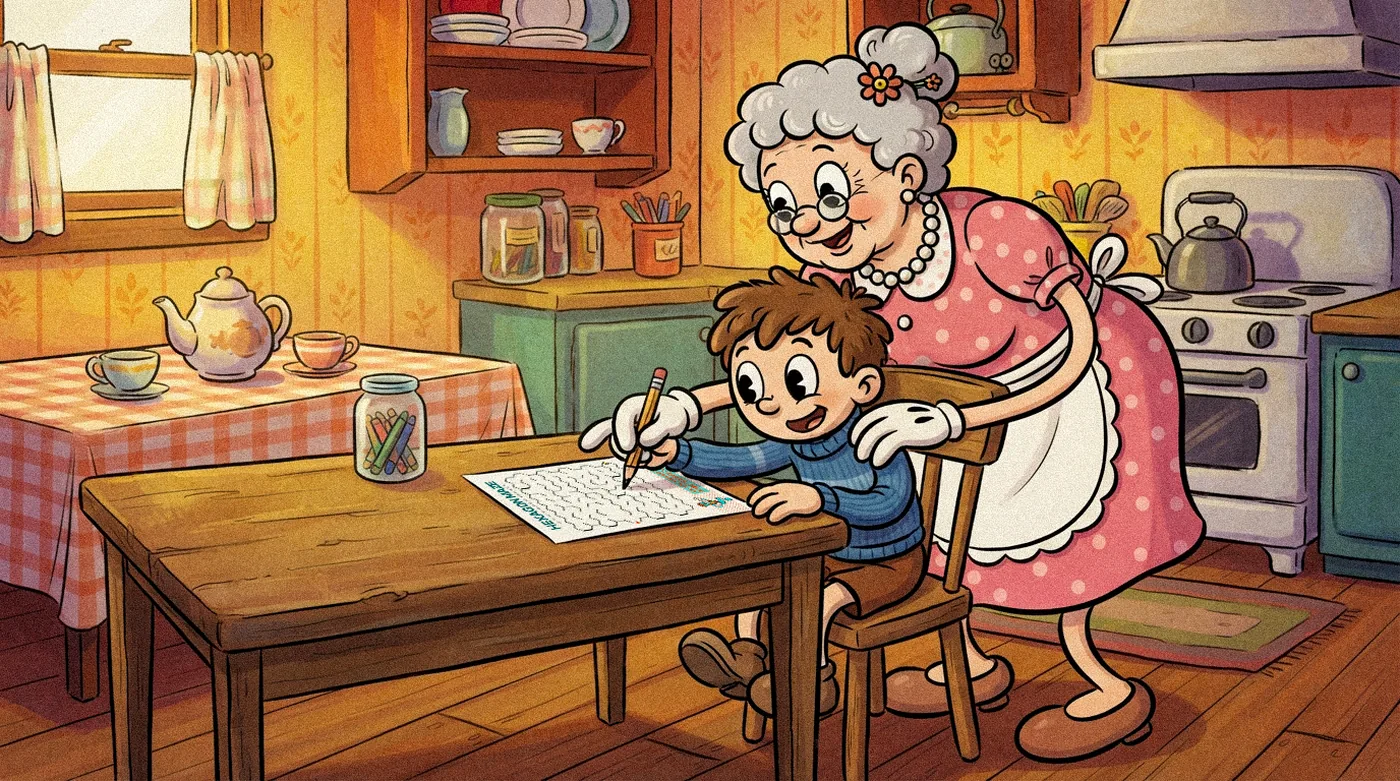
- Draws straight into the first wall — the corridor is too tight, or the task has been read as "reach the star" rather than "reach it along the paths." Try wider before you explain anything.
- Line wanders but stays inside — exactly right. That is the exercise happening.
- Stops at a junction and looks — route planning has arrived, and the sheet has quietly started doing a second job. Time to move up.
- Grips hard and presses through the paper — nothing to do with the maze. That is a pencil-size problem, and a chunkier pencil usually fixes it in one sitting.
Lifehack: put the sheet on the table sideways for a left-handed child so the star ends up on the left. The maze does not care, and drawing away from the body rather than across it removes a smudging problem that has nothing to do with the puzzle.
Why not just print a tracing sheet
Because a tracing sheet is honest about being practice, and a three-year-old can tell. The line has no destination; finishing it changes nothing. A maze has an end state — the star Mintee lost off his cap — and reaching it is a small event. The motor work is identical and the willingness is not.
There is a second, duller advantage: a maze is different every time it is printed. A tracing worksheet is the same sheet forever, so the second time through it is a copying exercise. Every maze here is generated per request, so a child can do their fifth wide maze this week and still be drawing a route rather than repeating one.
When to stop using the wide setting
When they stop drawing through walls and start pausing at junctions. That usually happens somewhere between four and five, and it is the moment the sheet changes from a hand exercise to a head exercise. At that point the corridor width has done its job and the useful next move is more turns rather than more room — which is the subject of how hard a maze should be.
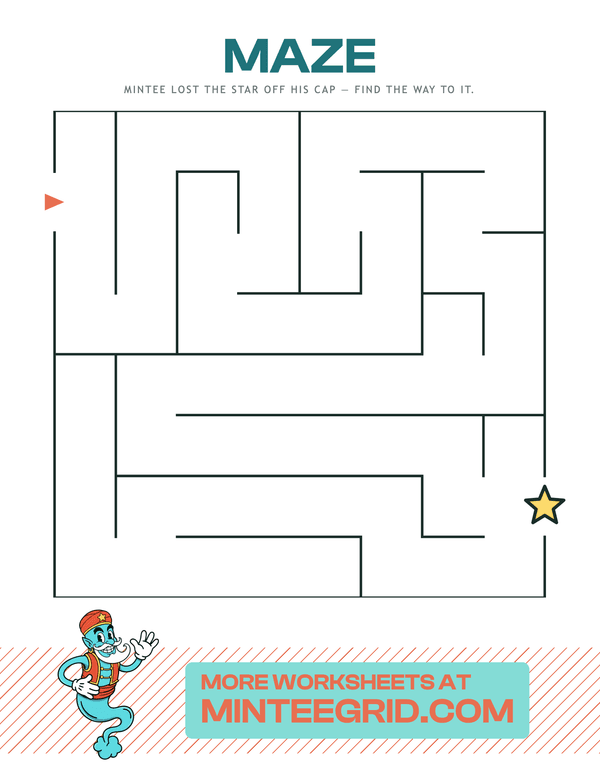
Try it yourself
Classic Maze
One way in, one way out — and never the same maze twice. Mazes · 3+ years.
Related
- Printable mazes by age — what comes after the widest setting
- What a maze actually teaches — the other three skills, once motor control is not the bottleneck
- Why worksheets beat screens for practice — the case for paper at this age generally
- I Spy worksheets for early counting — the other generator aimed at this age
FAQ
Do mazes really help with handwriting?
With the motor half of it, yes — keeping a pencil inside two lines for the length of a page is the same physical skill as staying on a ruled line, and a maze asks for it without anyone having to call it handwriting practice. It does nothing for letter formation, which is a separate job. Think of it as the thing that makes tracing letters possible rather than a substitute for it.
What corridor width should a 3-year-old have?
The widest setting, around 22mm on a classic maze — roughly eight cells across the page. A fat preschool pencil in a small fist needs room to be wrong. If a child is consistently drawing through walls, that is the first thing to check, well before anything about the puzzle.
Is it a problem if my child draws through the walls?
At three, no. Try one wider sheet first: if the wall-crossing stops, it was a motor limit and the maze was simply too tight. If it continues at the widest setting, they have probably read the task as "get to the star" rather than "get to the star along the paths" — worth saying out loud once, which usually settles it.
How often should we do this?
Short and often beats long and occasional. One sheet a day at three or four is plenty, and the moment it stops being fun it stops working, because the whole advantage of a maze over a tracing worksheet is that a child does it willingly.