Printable mazes for a classroom — twenty children, twenty different sheets
September 5, 2026 · 6 min read
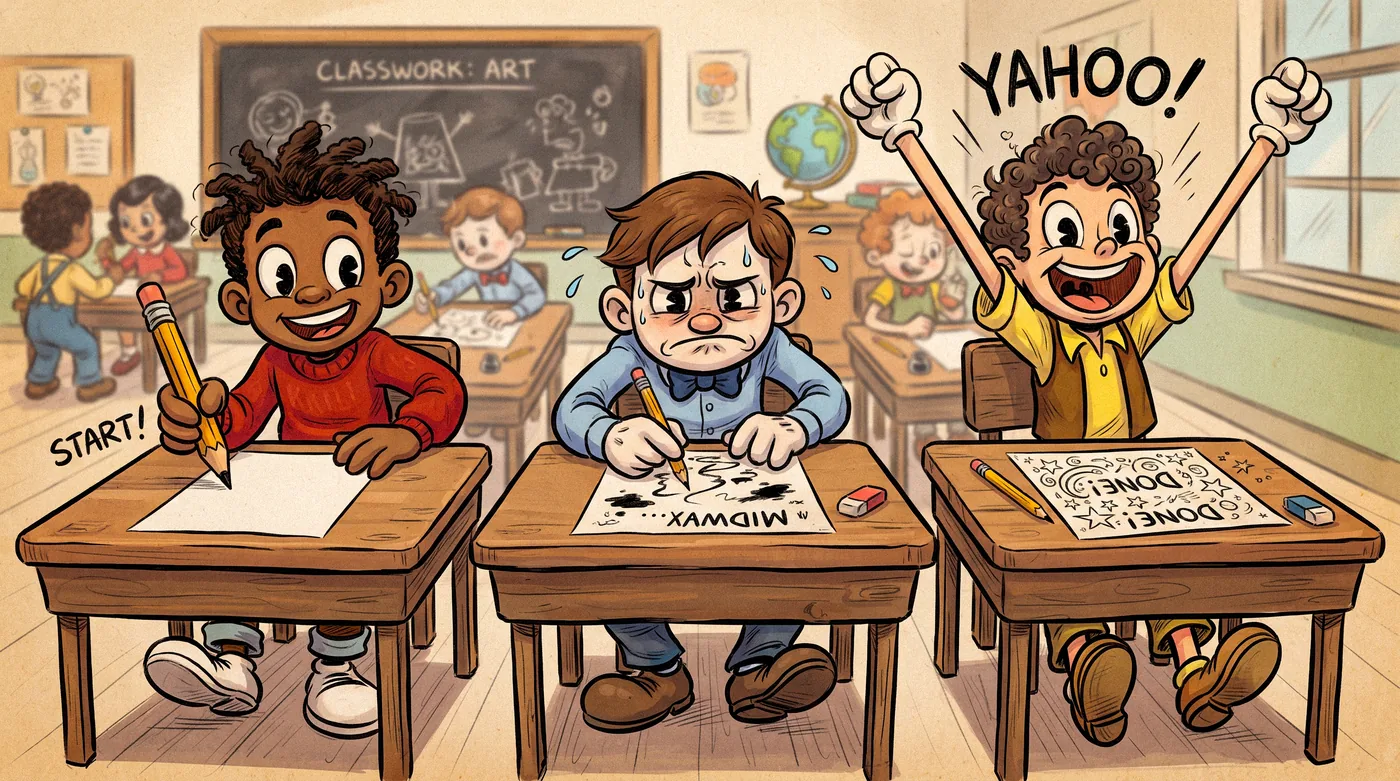
A maze pack has one property that nobody mentions on the cover: every child gets the same page. For a parent with one child that is invisible. For a teacher with thirty it produces four separate problems inside the first ten minutes, and all four have the same cause.
What actually goes wrong
They copy. Not maliciously — a child who is stuck glances sideways, sees the same maze with a pencil line already on it, and follows it. The exercise ends there, silently, and looks like success on the sheet.
Someone has already done it. In any class with mixed pace or a supply of leftover packs, a few children will have seen that exact maze before. They finish in twenty seconds and are bored for the rest of the activity.
The finishers finish together. Identical sheets produce a cluster of "I'm done" at roughly the same moment, which is the worst possible shape for a lesson.
You cannot re-run it. Next term, the same pack is now a memory test rather than a puzzle.
The fix is the print run, not the pack
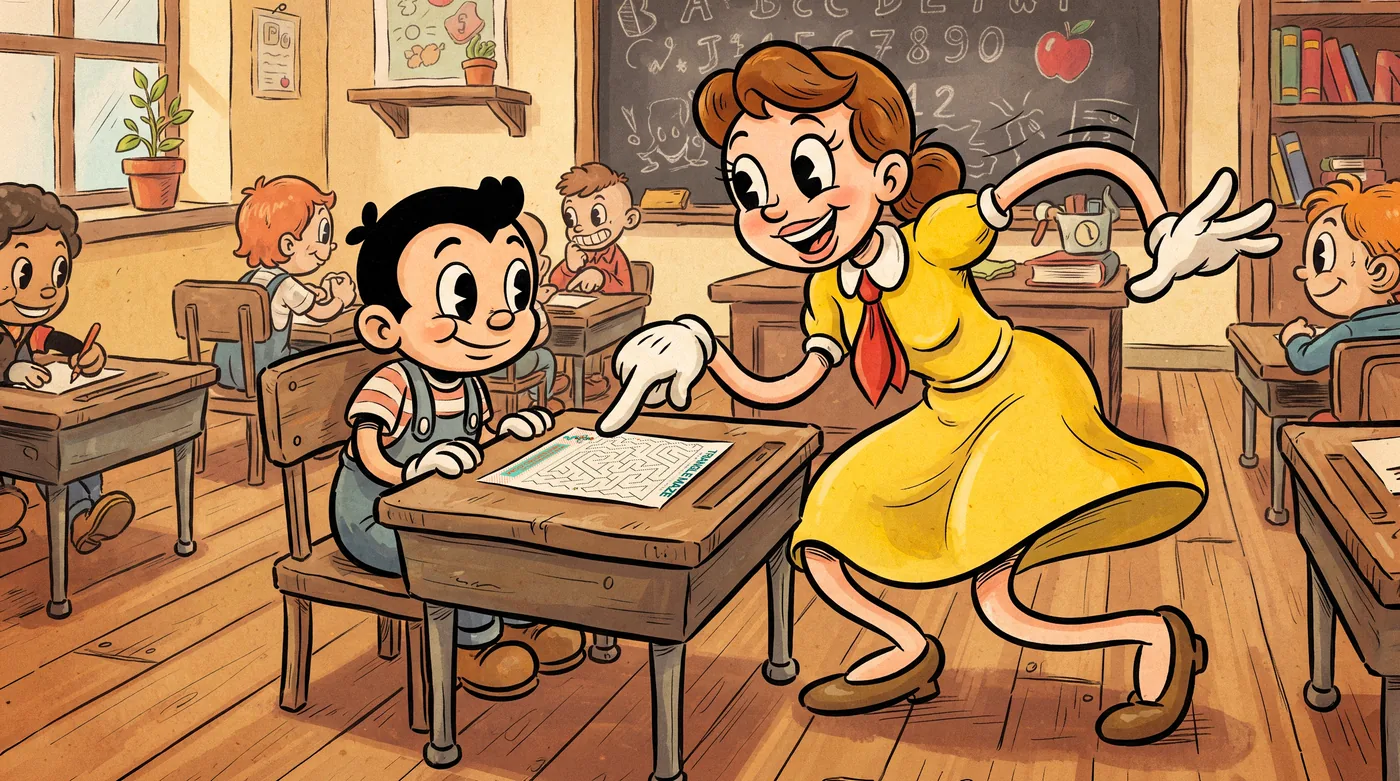
Every maze here is built when it is requested, so a batch of twenty at the same settings is twenty different mazes — same corridor width, same shape, same rough solving time, different route. That is the whole difference, and it removes all four problems at once. Copying gets you a wrong answer. Nobody has seen theirs before. Finishing times spread naturally. And the same settings next term produce a fresh set.
Set the sheet count on the slider, generate once, and the batch comes back as a single PDF ready to print.
Lifehack: print a batch one size wider than you think the class needs and keep a small stack of the next width down for early finishers. Spending the whole run on the harder setting leaves the slower half struggling for a reason that is about pencil control rather than thinking — see how hard a maze should be for why those are different problems.
Choosing one difficulty for a mixed class
You get one setting per run, so the sensible target is the middle of the room rather than the top:
- Reception / Pre-K — classic maze, widest corridors, one to a page. At this age it is a pencil exercise, and the width is what makes it achievable.
- Years 1–2 — classic at medium, or a circular maze if you want the goal visible from the start, which helps children who get lost halfway across a rectangular one.
- Years 3–4 — classic at narrow, or a triangle maze for something that does not read like the mazes they have seen.
- Years 5–6 — hexagon maze. Six ways out of every cell and no straight corridors; comfortably the hardest sheet here.
Two mazes to a page is worth knowing about for a short slot: it is two shorter puzzles rather than one harder one, so it fills ten minutes rather than twenty-five, with two finishes instead of one.
The answer keys
Answers come as their own pages after the puzzles, in the same order, rather than printed on the back. That is deliberate: it means you can print the whole PDF, hand out the front half, and keep the keys — or skip printing them at all and let children check each other's, which on twenty different mazes is a genuinely useful five minutes rather than a copying opportunity.
What a maze will and will not do for a lesson
It will practice route planning, holding a plan while carrying it out, recognizing a dead end and reversing, and pencil control. Those are real, and the second and third transfer well beyond the sheet.
It will not teach anything on a curriculum. There is no arithmetic in a maze and no letters. That is why the honest place for one in the schedule is a settling activity, an early-finisher task, or a wet-play alternative — not the lesson itself. When you want the same persistence with content underneath it, Crack the Code is the closest thing we make: same "keep going, you're getting somewhere" shape, with arithmetic inside.
Try it yourself
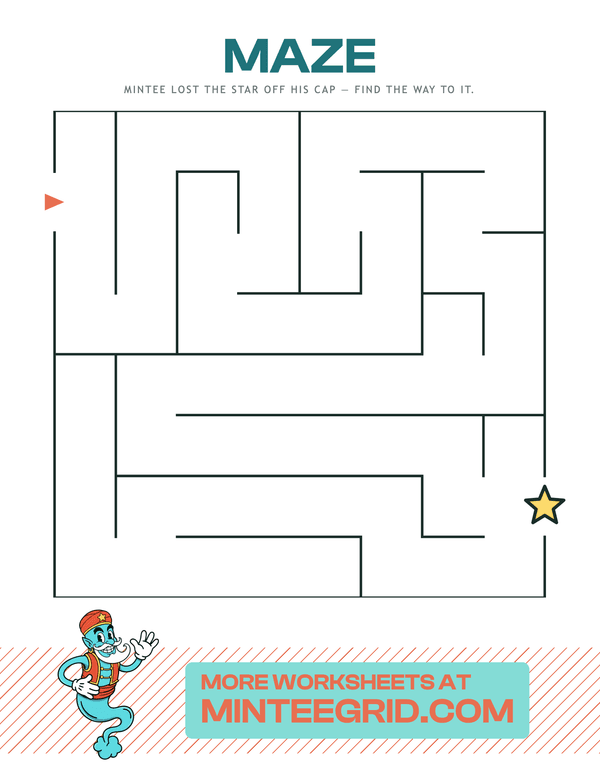
Classic Maze
One way in, one way out — and never the same maze twice. Mazes · 3+ years.
Related
- Printable mazes by age — the shape-by-age ladder in full
- How hard should a maze be? — picking one setting for a room full of different hands
- Printing tips for crisp sheets — batch printing without wasting a cartridge
- What a maze actually teaches — what to tell a colleague who asks why
FAQ
Can I print a different maze for every child in the class?
Yes — that is the default rather than an option. Nothing is pre-drawn, so a batch of twenty at the same settings is twenty different mazes. Same difficulty, same shape, same time to solve, different route. Nobody can copy sideways and nobody gets one that has already been round the room.
How do I print thirty mazes at once?
Pick a sheet count from the slider and generate once — the whole batch comes back as a single PDF. Batches are also cheaper per sheet than generating one at a time, which is the point of the tiered pricing rather than an accident of it.
Do I get an answer key for a batch?
One per sheet, printed after the mazes rather than interleaved with them, so you can print the puzzle pages, keep the keys, and hand out only what the children need. On a batch of twenty that is twenty puzzle pages then twenty keys in the same order.
What about children who finish early?
Have a harder shape ready rather than a bigger version of the same one. A hexagon maze at medium corridors is a genuinely different problem, not a longer one, so an early finisher gets something to think about rather than more of what they have already proved they can do.