What comes before handwriting — and why letters are the last step
September 6, 2026 · 7 min read
Handwriting is the last step of a long process, and it is the one everybody starts with. A four-year-old who is finding letters hard is usually not failing at letters — they are being asked to do three difficult things at once, one of which is the letters.
The three things that arrive first
Hand strength. Holding a pencil at a useful angle for ten minutes is physically demanding for a small hand, and a tired hand produces bad writing regardless of what the child knows. This is built almost entirely away from paper: playdough, scissors, threading, tearing, spray bottles, pegs, opening jars.
Control of the line. Keeping a mark where you meant to put it — inside a boundary, along a path, round a corner. This is the skill a letter actually needs, and it is the one a maze is made of.
Knowing the shape. What an S looks like, from memory, well enough to produce it. This is the only one of the three that is about letters, and it is the last to arrive.
Ask a child to write an S and they need all three at once. Take one away and the other two get easier.
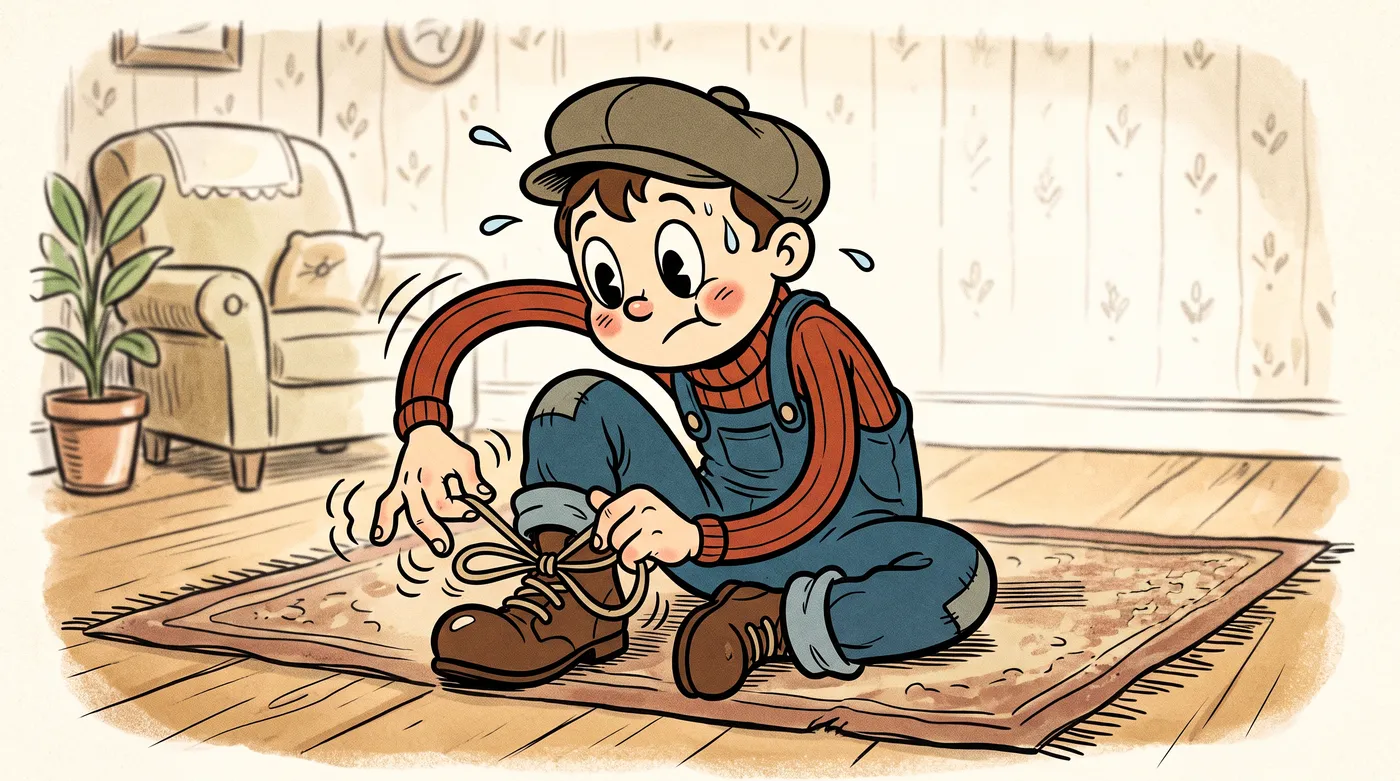
Why a maze is a pre-writing exercise
A maze asks for the second thing on its own. Keep the pencil inside the corridor, turn deliberately at a junction, do not lift off, go back when it does not work. Those are the mechanics of writing a letter with the letter removed.
That removal is the whole point. A child working a maze is not being assessed, cannot get the shape wrong, and does not have to remember anything. Their entire attention is available for the one skill being built — which is exactly the condition that never applies when they are practicing letters.
The corridor width is the whole control here. Wide corridors are forgiving: being three millimeters off the middle costs nothing, and a child with a shaky hand can succeed. Narrow corridors demand precision. Starting wide and moving in over months is the same progression as a handwriting book going from fat lines to narrow ones, except that nobody is checking the output.
| Age | Width | What is being built |
|---|---|---|
| 3 | Widest | Getting a line to go where you meant. Little else. |
| 4 | Wide | Deliberate turns; not lifting the pencil. |
| 5 | Wide to medium | Holding a plan for longer than a stroke. |
| 6+ | Medium | Precision. By now it is a puzzle, not an exercise. |
The bicycle problem
The reason this order matters is the same reason you do not teach a child to ride a bike by explaining balance.
There is a moment on a bicycle where the running-behind stops and the child does not know it yet. What made that moment possible was not instruction; it was hours of scooting along with both feet down, building the thing that balance is made of. Nobody called that "balance practice" and the child never felt observed.
Handwriting has the same shape. A child who has spent a year keeping a pencil inside a path has built the hand for letters, and they built it while doing something that was never about letters. The instruction lands on a hand that is already ready, which is the only condition under which instruction works.
What to do when it is genuinely not working
Check the hand before the head. If a child avoids all pencil work, try five minutes of playdough or scissors first and then the sheet. A surprising amount of "won't" is "can't for long".
Go wider, not easier. Reducing the amount of work does nothing for a child whose problem is control. Widening the path does.
Stop correcting the grip at four. A fist grip at three or four is normal and resolves with strength. Correcting it repeatedly makes children write less, which makes the hand weaker, which is the wrong direction. At six it is worth raising with a teacher.
Let them finish something. The whole reason to use a maze rather than a worksheet of lines is that a maze has an ending, and a child who finishes will come back.
Lifehack: print the same maze at wide today and at medium in a month, without saying anything about it. Children almost never notice their own progress on handwriting because the output always looks messy to them — but they notice finishing a narrower maze, and that is the same fact in a form they can see.
Where to start
- Classic maze at the widest setting — the plain version of this exercise
- A name maze — the same thing, with the letters they most want to know
- Letter mazes — one letter at a time, once the shape is the thing you are after
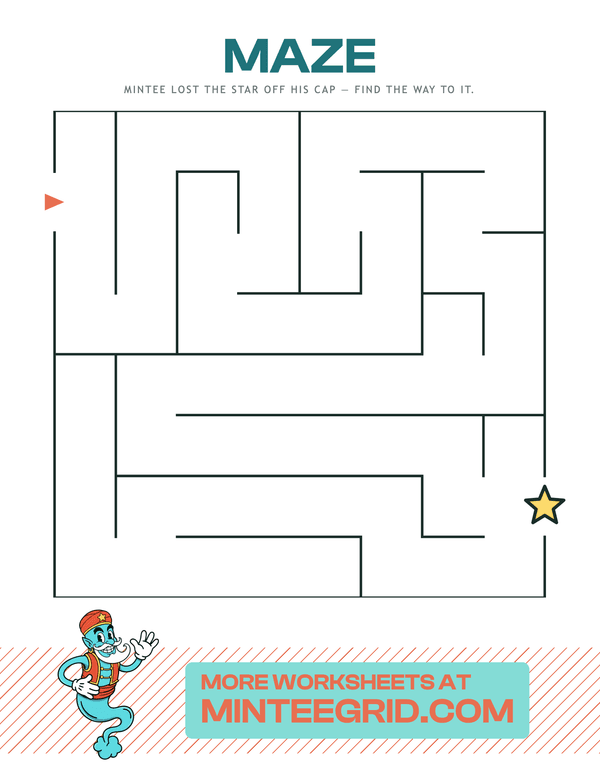
Try it yourself
Classic Maze
One way in, one way out — and never the same maze twice. Mazes · 3+ years.
Related
- Mazes before handwriting — the short version of this argument
- A parent's guide to picking difficulty — reading the hand rather than the age
- How long should a child work on a worksheet? — how much a small hand actually has
- A maze made from your child's name — letters worth caring about
FAQ
At what age should a child start handwriting practice?
Formal letter formation around five, but the groundwork starts at three and it is not letters. A child needs a stable pencil grip, the ability to keep a line inside a boundary, and enough shoulder and wrist control to move the hand without moving the whole arm — none of which is built by writing letters.
Do mazes help with handwriting?
They help with the part that comes before it. A maze asks for exactly the skill a letter asks for — keep the line inside the path, change direction on purpose, do not lift the pencil — with none of the memory load of recalling what the letter looks like.
My child grips the pencil in a fist. Is that a problem?
At three or four, no — it is normal and it resolves with strength rather than correction. If it is still a whole-fist grip at six, that is worth mentioning to a teacher. Constant correcting at four tends to make children write less, which is the opposite of what helps.
What is the single most useful pre-writing activity?
Anything that builds hand strength without a pencil — playdough, threading beads, tearing paper, using scissors, squeezing a spray bottle. A weak hand is the most common reason handwriting is difficult, and no amount of letter practice fixes it.