Mazes that already exist in nature — and nobody drew any of them
September 6, 2026 · 7 min read
A child who thinks a maze is something a grown-up drew to keep them busy is not wrong, exactly. But it is a small way to think about it, and there is a bigger one available for free: mazes keep happening on their own, in places where nothing is trying to make a puzzle at all.
Four of them are worth showing to a child, and each one explains something different about the sheet on the table.
The anthill
Cut an ant colony in half and you get the most honest maze there is. Tunnels going down and sideways, chambers off the corridors, stores, nurseries, dead ends where a passage was abandoned. Nobody surveyed it. Each tunnel exists because an ant dug where digging seemed sensible, and the whole thing adds up to a structure that would take a person a fortnight to plan.
What it shows: a maze does not need a designer. It needs a lot of small local decisions and something to fill.
That is also, almost exactly, how the mazes on this site are built. Nothing is drawn in advance; a route wanders forward, backs up when it runs out of room, and the maze is what is left over. Which is why every sheet is different — same as every anthill.
The honeycomb
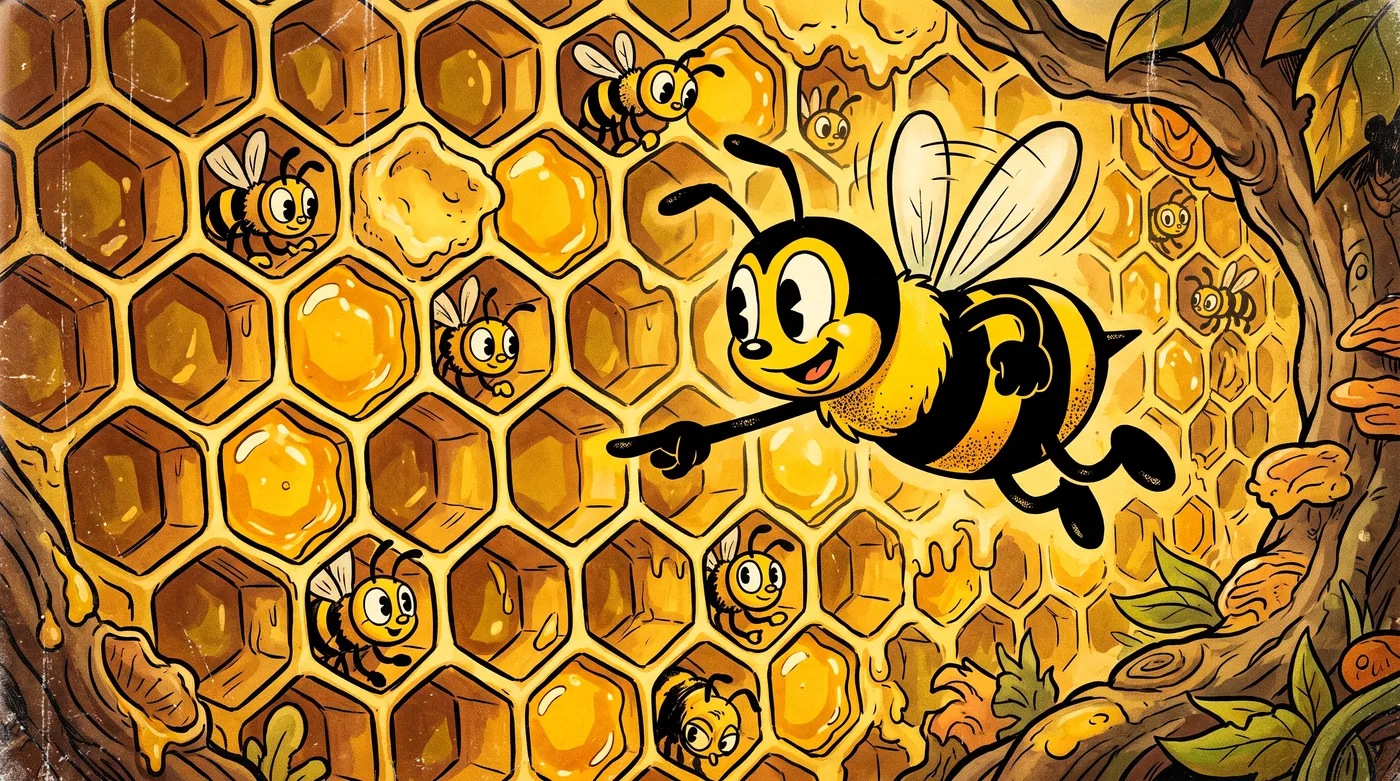
A honeycomb is not a maze — it is the opposite, a completely regular grid with no route through it. But it is the reason one of our sheets is shaped the way it is.
Bees build in hexagons because a hexagon is the shape that encloses the most floor with the least wall. Nothing else tiles a flat surface that efficiently. It is a solved problem in geometry and the bees got there first by a long way.
Put corridors on that grid instead of honey and you get the hexagon maze, where the same efficiency has a side effect: every cell touches six others instead of four. Six ways out of every junction is a genuine step up in difficulty, and it is why that sheet is the hardest thing in the family and sits at the older end of the range.
What it shows: the shape of the grid changes the puzzle. Same idea, six choices instead of four, completely different sheet.
The river delta
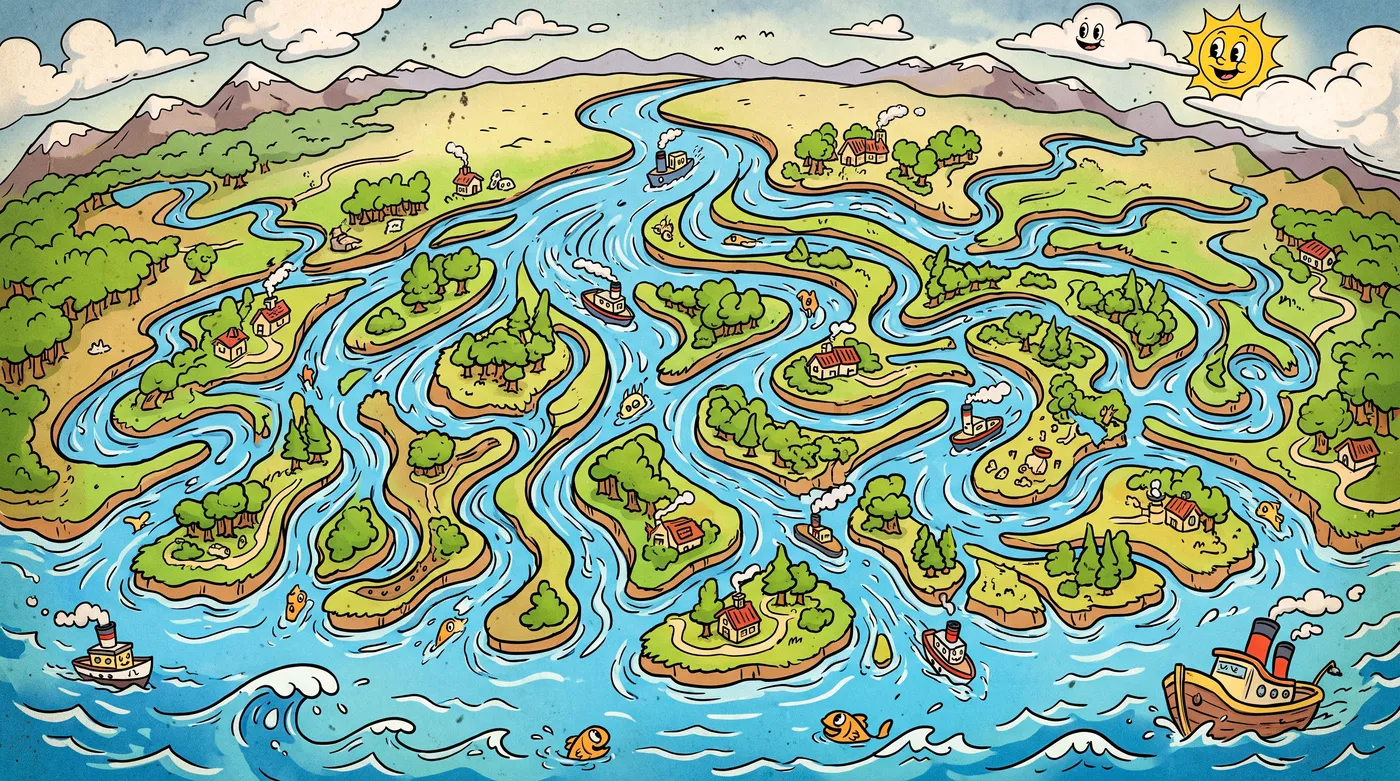
Where a big river reaches the sea it slows down, and slow water cannot carry sediment. The sediment drops, blocks the channel, and the river splits to go around it. Then it does that again. And again, for a few thousand years.
The result is a maze with a genuinely enormous number of dead ends — channels that silt up, loops that reconnect, routes that look promising from above and end in a mudbank. Boats need charts precisely because you cannot solve a delta by looking at it.
What it shows: dead ends are not a trick played on the solver. They are what you get when something is repeatedly obstructed, which is exactly how a maze is generated.
The tunnels under bark
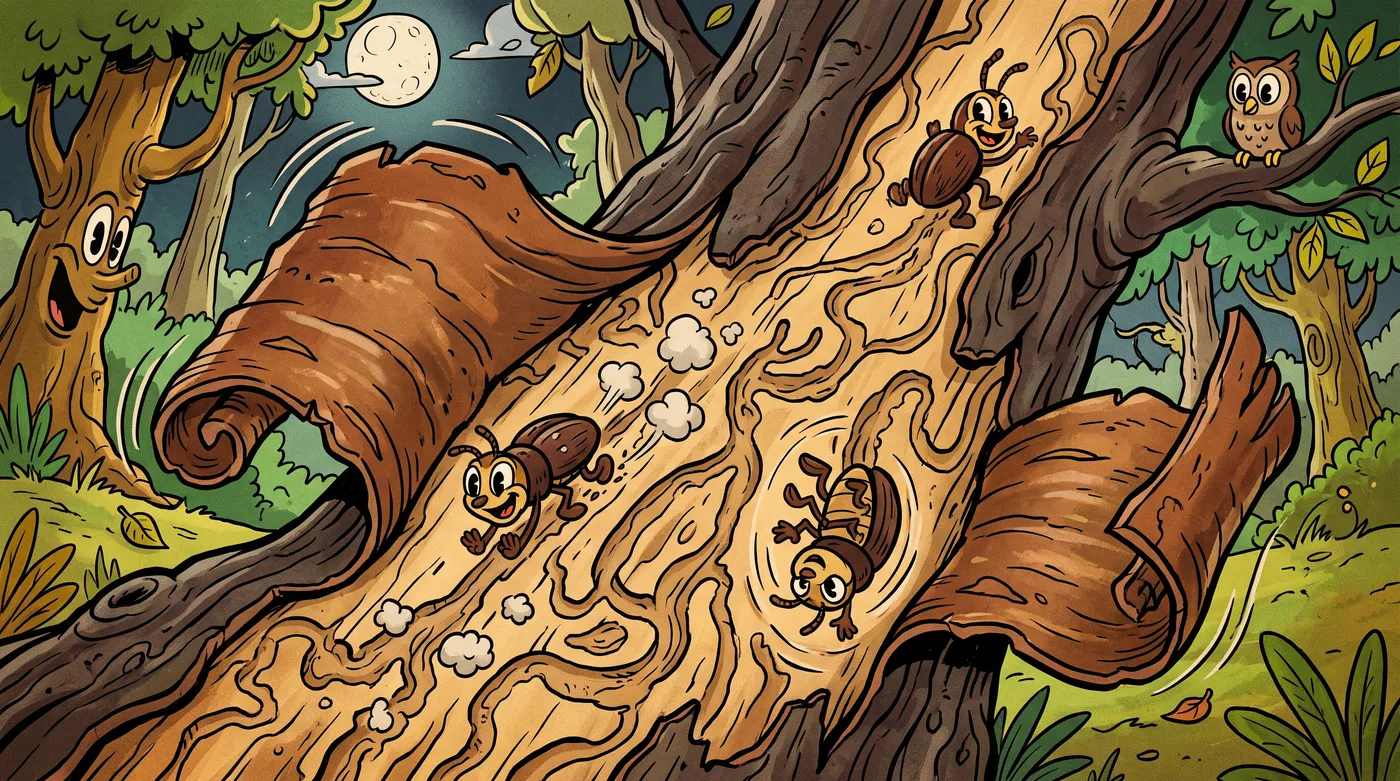
Lift a piece of loose bark off a dead tree and there is often a pattern underneath that looks deliberate: a long central gallery with dozens of smaller tunnels branching off it, fanning out, each one getting wider as it goes.
It is a bark beetle. The mother chews the central gallery and lays eggs along both sides; each larva eats its way outward, getting bigger as it goes, so its tunnel widens with it. The pattern is a family tree, drawn in wood, by animals that never see the whole thing.
What it shows: the most maze-like patterns in nature are usually a record of something happening over time, not a plan. It is the closest thing to watching a maze get generated.
Lifehack: this is the one to actually go and find. Dead branches with loose bark are common in any wood or park, the pattern underneath is spectacular, and a child who has lifted the bark themselves will look at a maze differently for a while afterwards.
Why any of this matters for a worksheet
Because the honest problem with worksheets is that they feel arbitrary. A child doing a maze because it was put in front of them is doing a chore.
A child who has seen an anthill in cross-section knows that the shape on their page is a real thing that real animals live inside. That does not make the sheet easier and it is not a trick to get them to concentrate. It just moves it out of the "made up to keep me busy" category, and for some children that is the whole difference.
Where to go next on the site
- Hexagon maze — the honeycomb, with corridors
- Spiral maze — the snail shell, the fern and the whirlpool
- Animal mazes — fifteen creatures, each one a maze in its own outline
Try it yourself
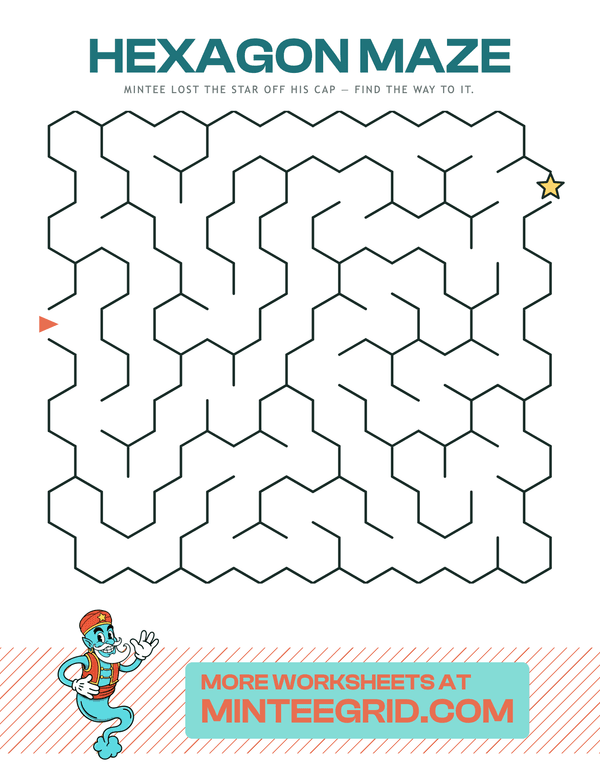
Hexagon Maze
Six ways out of every cell, and not one straight corridor. Mazes · 7+ years.
Related
- Where mazes came from — the human half of the story
- Animal mazes that look like animals — chosen by outline, not by species
- When square mazes get too easy — where the hexagon fits
- What a maze actually teaches — the honest list
FAQ
Are there real mazes in nature?
Yes, and several of them are better mazes than anything a person designs. An ant colony is a genuine three-dimensional network of tunnels and dead ends; the tunnels a bark beetle leaves under tree bark are a branching maze cut into wood; a river delta is a maze of channels where most routes to the sea are dead ends.
How is a honeycomb related to a hexagon maze?
Both are built from hexagons for the same reason — a hexagon is the shape that tiles a surface with the least wall for the most floor. In a maze that also means every cell has six ways out instead of four, which is why a hexagon maze is harder than a square one.
Why do rivers make maze shapes?
A delta forms where a river slows down and drops the sediment it was carrying. The sediment blocks the channel, the water splits and goes round, and that repeats — so the pattern is made by the water being obstructed over and over, which is roughly how you would draw a maze by hand.
What can a child learn from this?
That a maze is not an invention. Branching, dead ends and one route through are what happens whenever something has to fill a space or find a way out of one, which makes the sheet a lot more interesting than a puzzle somebody made up.