Two children, two levels, one table — worksheets for siblings
September 6, 2026 · 7 min read
Two children at one table, two years apart, one activity. This goes wrong in a very specific way and it is almost never the way parents expect.
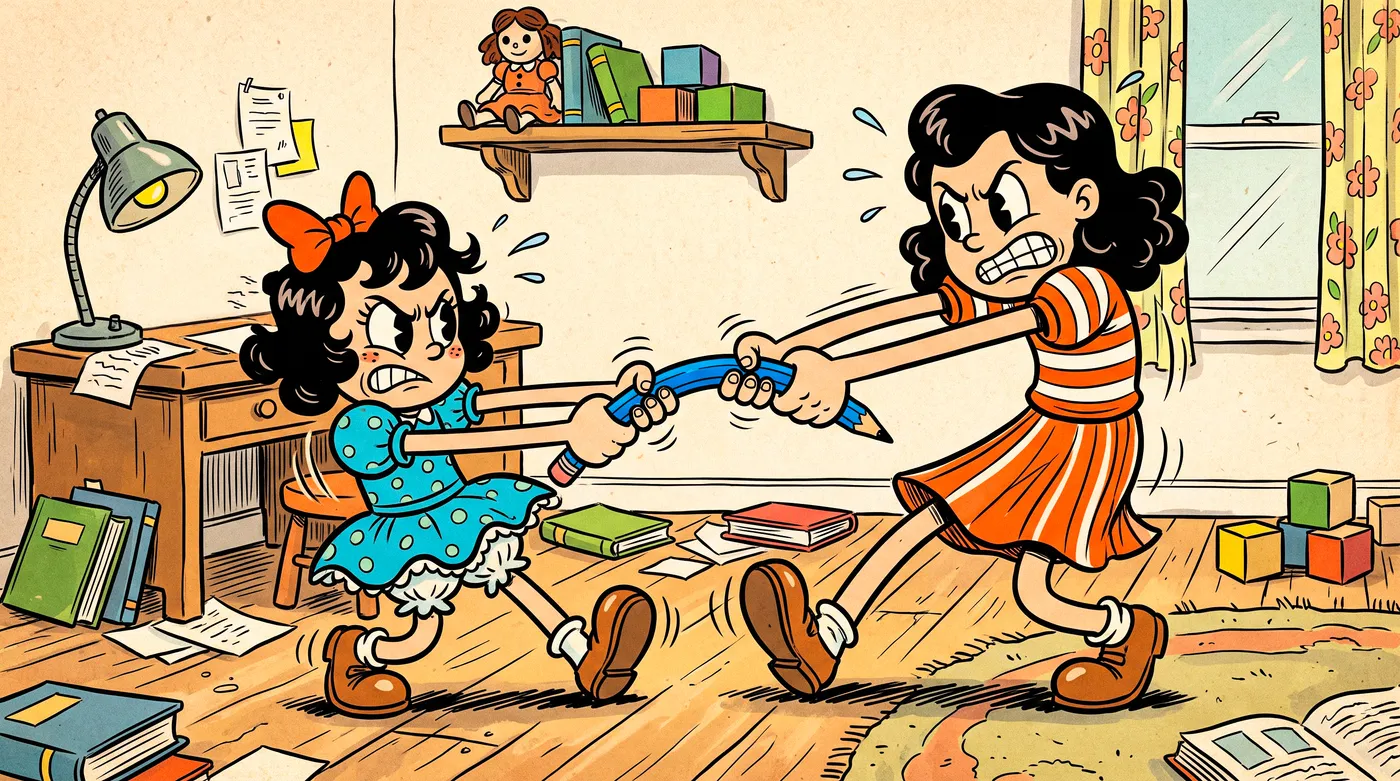
It is not that the work is too hard for one of them. It is that one of them finishes first. The younger child looks up, sees a finished sheet, and the whole thing stops being an activity and becomes a comparison — which they lose, in front of somebody whose opinion they care about more than yours.
Everything below is about preventing that one moment.
Match the finishing time, not the difficulty
The instinct is to give both children the same sheet and let the older one find it easy. That produces exactly the failure above.
The better move is to give them the same sheet type at different widths, chosen so they finish within a few minutes of each other. From across the table the two sheets look like the same activity, because they are; the five-year-old simply has a maze with wider corridors and fewer junctions.
| Ages | Younger gets | Older gets |
|---|---|---|
| 4 and 6 | Classic maze, wide | Classic maze, medium |
| 5 and 8 | Classic maze, wide | Shaped maze, medium |
| 6 and 9 | Classic maze, medium | Hexagon maze, medium |
| 7 and 11 | Animal maze, medium | Hexagon maze, narrow |
Past about four years of gap, stop stretching one generator and change the sheet instead. A wide hexagon maze is not a good sheet for a five-year-old; a wide classic maze is.
Two sheets that cannot be compared
Half the arguments at a table full of siblings are about fairness, and fairness arguments need a shared reference. Take the reference away and the argument has nothing to stand on.
Nothing here is pre-drawn, so two children generated at identical settings get two different mazes. There is no "hers is easier" because there is no hers-versus-mine — they are not the same puzzle. This also kills copying, which between siblings is less about cheating and more about the younger one wanting to keep up.
The strongest version is a name maze each. A sheet with your own name across it is unarguably yours, and there is no version of the fairness complaint that survives it.
The finish-line problem
Even with matched settings, somebody finishes first. Two things make that a non-event.
Have the next thing already on the table, face down. Not fetched from a drawer while the other child is still working — that is a small ceremony around finishing and it lands badly. Two sheets each, from the start.
Let the first finisher check the answer key. Every generation can include one, printed after the puzzles. Handing the key to whoever finishes first gives them a job that is not "wait", and it is a genuinely useful two minutes because reading a solved route is a different skill from finding one.
The toddler at the same table
The child who is two years too young for any of this is the hardest part of the arrangement and the easiest to solve.
Give them the answer key. A maze with the route already drawn through it in color is a tracing sheet — follow the line with a finger, then with a crayon. It comes free with any generation you were doing anyway, it is genuinely age-appropriate for two- and three-year-olds, and it means they have the same object as their siblings rather than a substitute.
When to stop pretending it is one activity
Sometimes the honest answer is that two children do not want to do the same thing, and arranging for them to is more work than it is worth.
The signal is when the younger one stops looking at their sheet and starts narrating the older one's. At that point the activity has already become a shared one, and the useful move is to lean into it: one harder sheet, both children on it, older one holding the pencil, younger one allowed to say "no, that way". That is a perfectly good twenty minutes and it is not a failure of the plan.
Lifehack: print the two sheets before either child is in the room. Choosing settings in front of them turns the difficulty into a negotiation, and no five-year-old has ever accepted "yours is the easy one" gracefully.
The car version
The same problem, in a worse room. Two children in a back seat with identical sheets produce an argument inside four minutes, and there is nowhere to send anybody.
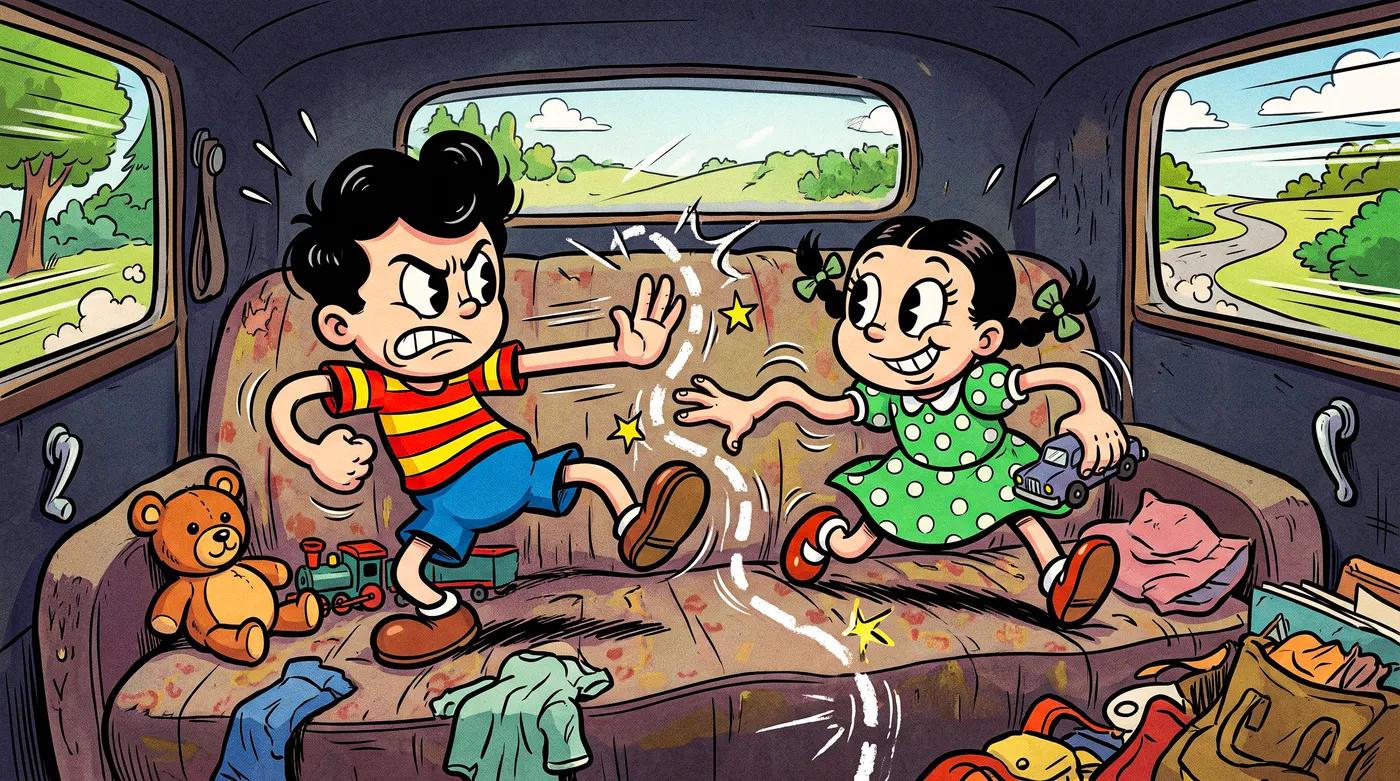
Different sheets solve it for the same reason as at the table, with the addition that in a car the width has to go wider than you would choose at home — a bouncing pencil makes anything narrow into a source of frustration. There is more on that in worksheets for waiting rooms and long journeys.
Try it yourself
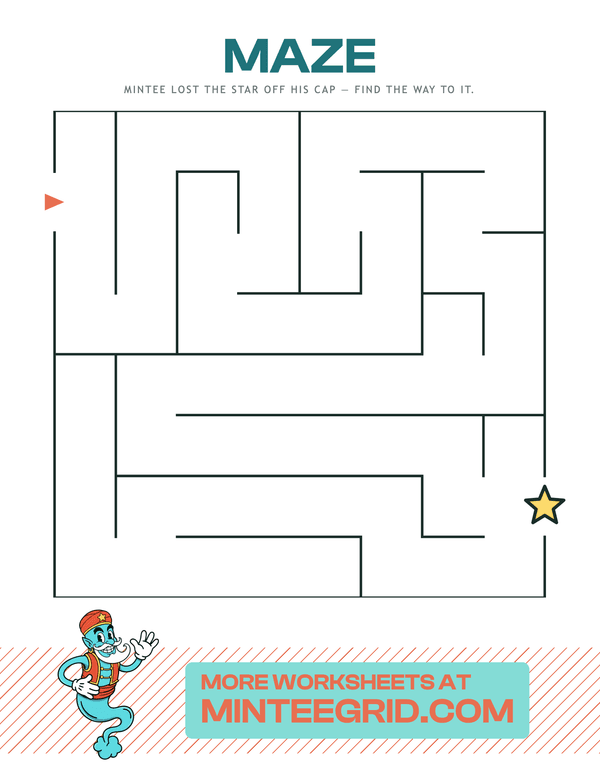
Classic Maze
One way in, one way out — and never the same maze twice. Mazes · 3+ years.
Related
- How hard should a maze be? — what each width actually changes
- A parent's guide to picking difficulty — reading the child rather than the age
- How long should a child work on a worksheet? — matching sessions to attention
- A maze made from your child's name — the sheet nobody can argue about
FAQ
How do I give two children of different ages the same activity?
Same sheet type, different corridor width. A five-year-old on a wide maze and an eight-year-old on a narrow one are doing visibly the same thing and finishing at roughly the same time, which is the combination that keeps a table calm.
My children argue about who got the better sheet. What helps?
Sheets that cannot be compared. Every maze here is generated when it is requested, so two children at identical settings get two different puzzles — there is no 'his is easier' because there is no shared reference. Name mazes remove it entirely, since each sheet is visibly one child's.
How big an age gap can share one activity?
About four years, using the width control. Beyond that the younger child needs a different sheet type rather than a wider setting — pair a wide classic maze with a hexagon maze rather than trying to stretch one generator across seven years.
What about a much younger toddler at the same table?
Give them the answer key. A solved maze with the route already drawn is a tracing sheet, which is a genuine activity for a two- or three-year-old and comes free with any generation.